

Heart rate zones are an essential aspect of cardiovascular training, and they are used to monitor training intensity during exercise or everyday activities. The National Academy of Sports Medicine (NASM) has developed a system for calculating heart rate zones based on a percentage of the estimated maximum heart rate. Understanding heart rate zones is crucial for anyone looking to improve their cardiovascular health or fitness level.
Applying heart rate zones to training can help individuals achieve their fitness goals more efficiently. By training within specific heart rate zones, individuals can improve their cardiovascular endurance, burn fat, and increase their VO2 max. Cardiovascular training can also help to reduce the risk of developing chronic diseases such as heart disease, diabetes, and obesity.
Monitoring and measuring heart rate during exercise is essential for ensuring that individuals are training within their desired heart rate zone. Heart rate monitors can be used to track heart rate during exercise, and individuals can also use the talk test to determine if they are training within their desired heart rate zone. Safety and considerations in heart rate training are also important, and individuals should consult with a healthcare professional before starting any new exercise program.
Key Takeaways
- Heart rate zones are used to monitor training intensity during exercise or everyday activities.
- Applying heart rate zones to training can help individuals achieve their fitness goals more efficiently.
- Monitoring and measuring heart rate during exercise is essential for ensuring that individuals are training within their desired heart rate zone.
Understanding Heart Rate Zones
Heart rate zones are specific ranges of heartbeats per minute that determine the intensity of an individual’s workout. By monitoring their heart rate, individuals can determine if they are working at an appropriate level of intensity to achieve their fitness goals. The National Academy of Sports Medicine (NASM) has developed a system of five heart rate training zones that are based on an individual’s maximum heart rate (MHR) and resting heart rate (RHR).
The Five Heart Rate Training Zones
The five heart rate training zones are as follows:
- Zone 1: Very Light – This zone is at 50-60% of an individual’s MHR and is considered to be a warm-up or cool-down zone. It is ideal for beginners or individuals who are recovering from an injury.
- Zone 2: Light – This zone is at 60-70% of an individual’s MHR and is considered to be a fat-burning zone. It is ideal for individuals who are looking to improve their endurance and burn fat.
- Zone 3: Moderate – This zone is at 70-80% of an individual’s MHR and is considered to be an aerobic zone. It is ideal for individuals who are looking to improve their cardiovascular fitness.
- Zone 4: Hard – This zone is at 80-90% of an individual’s MHR and is considered to be an anaerobic zone. It is ideal for individuals who are looking to improve their speed and power.
- Zone 5: Maximum – This zone is at 90-100% of an individual’s MHR and is considered to be a sprint zone. It is ideal for individuals who are looking to improve their maximum speed and power.
Calculating Your Heart Rate Zones
To determine an individual’s heart rate zones, they must first calculate their MHR and RHR. The Tanaka formula is a commonly used method to calculate MHR, which is 208 – (0.7 x age). For RHR, individuals should measure their heart rate when they are at rest, such as when they wake up in the morning.
Once an individual has calculated their MHR and RHR, they can use the NASM’s formula to calculate their heart rate zones. The formula is as follows:
- Zone 1: (MHR – RHR) x 0.5 + RHR
- Zone 2: (MHR – RHR) x 0.6 + RHR
- Zone 3: (MHR – RHR) x 0.7 + RHR
- Zone 4: (MHR – RHR) x 0.8 + RHR
- Zone 5: (MHR – RHR) x 0.9 + RHR
Importance of Resting and Maximum Heart Rate
Resting heart rate is an important factor in determining an individual’s heart rate zones. The lower an individual’s RHR, the more efficient their cardiovascular system is at delivering oxygen to their muscles. This means that they can work at a higher intensity without reaching their maximum heart rate.
Maximum heart rate is also important because it determines an individual’s upper limit for exercise intensity. Working above an individual’s MHR can be dangerous and can lead to injury or other health problems.
It is important to note that heart rate zones are just one tool for monitoring exercise intensity. Other factors such as perceived exertion, heart rate variability, and lactate threshold should also be considered. Individuals should consult with a medical professional before starting any exercise program and should always listen to their body to avoid injury.
Applying Heart Rate Zones to Training

Heart rate zones are an essential tool for creating an effective training program. By using these zones, trainers can tailor workouts to suit individual fitness levels, goals, and training requirements.
Creating a Heart Rate Zone-Based Training Programme
To create a heart rate zone-based training programme, trainers must first determine the client’s maximum heart rate (MHR). This can be calculated using the formula: 220 – age = MHR. Once the MHR is known, trainers can use it to establish the client’s heart rate training zones.
The following table shows the different heart rate zones and their corresponding intensity levels:
| Heart Rate Zone | Intensity Level | Benefits |
|---|---|---|
| Zone 1: Warm-up | 50-60% MHR | Improves circulation and prepares the body for exercise |
| Zone 2: Fat Burning | 60-70% MHR | Burns fat and improves endurance |
| Zone 3: Aerobic | 70-80% MHR | Improves cardiovascular fitness and endurance |
| Zone 4: Anaerobic | 80-90% MHR | Increases speed and power |
| Zone 5: Maximum Effort | 90-100% MHR | Increases maximum speed and power |
Once the heart rate zones have been established, trainers can create a training program that incorporates different zones for varied workouts.
Incorporating Different Zones for Varied Workouts
Incorporating different zones into a training program can help clients achieve their fitness goals more efficiently. For example, if a client’s goal is to burn fat and lose weight, the trainer may focus on Zone 2 workouts, which are designed to burn fat and improve endurance.
Alternatively, if a client’s goal is to improve their cardiovascular fitness and endurance, the trainer may focus on Zone 3 workouts, which are designed to improve cardiovascular fitness and endurance.
Interval training can also be incorporated into a heart rate zone-based training program. This involves alternating between high-intensity exercise in Zone 4 and low-intensity exercise in Zone 2 or 3. This type of training is highly effective for improving cardiovascular fitness, burning fat, and increasing endurance.
It is important to note that recovery is just as important as intensity when it comes to heart rate zone-based training. Trainers must ensure that clients have adequate recovery time between workouts to avoid injury and overtraining.
In conclusion, heart rate zone-based training is a highly effective way to achieve fitness goals. By creating a training program that incorporates different zones and interval training, trainers can help clients improve their cardiovascular fitness, burn fat, and increase endurance. However, it is important to ensure that clients have adequate recovery time between workouts to avoid injury and overtraining.
Monitoring and Measuring Heart Rate
Using Heart Rate Monitors and Fitness Trackers
Heart rate monitors and fitness trackers are essential tools for monitoring and measuring heart rate during exercise. These devices are worn on the wrist, neck, or thumb, and they measure the pulse rate, which is then converted into heart rate data.
A heart rate monitor or fitness tracker can be used to track the heart rate during a workout, and it can also be used to set target heart rate zones. For example, a personal trainer may use a heart rate monitor to set a target heart rate zone for a client based on their fitness level and goals.
Understanding Heart Rate Data for Effective Training
Heart rate data can be used to ensure effective training. By understanding heart rate zones, individuals can train at the right intensity to achieve their fitness goals. The heart rate zones are typically calculated based on a percentage of the individual’s estimated maximum heart rate.
For example, the NASM-PES (National Academy of Sports Medicine – Performance Enhancement Specialist) uses four heart rate zones to prescribe specific cardiovascular training programs for clients. These zones are based on the individual’s maximal heart rate (MHR) and include:
- Zone 1: 65-75% of MHR (aerobic base training)
- Zone 2: 76-85% of MHR (aerobic endurance training)
- Zone 3: 86-95% of MHR (anaerobic threshold training)
- Zone 4: 96-100% of MHR (maximal sprint training)
By training in the appropriate heart rate zone, individuals can improve their cardiovascular fitness, burn fat, and increase endurance. However, it is important to note that heart rate data should be used in conjunction with other measures of fitness, such as body composition and strength, to ensure a well-rounded fitness program.
It is also important to note that heart rate monitors and fitness trackers may not be 100% accurate and may vary from person to person. Therefore, it is recommended to use these devices as a guide and to listen to the body’s cues during exercise.
In summary, heart rate monitors and fitness trackers are valuable tools for monitoring and measuring heart rate during exercise. By understanding heart rate zones, individuals can train at the right intensity to achieve their fitness goals. However, it is important to use heart rate data in conjunction with other measures of fitness and to listen to the body’s cues during exercise.
Safety and Considerations in Heart Rate Training
Consulting Health Professionals
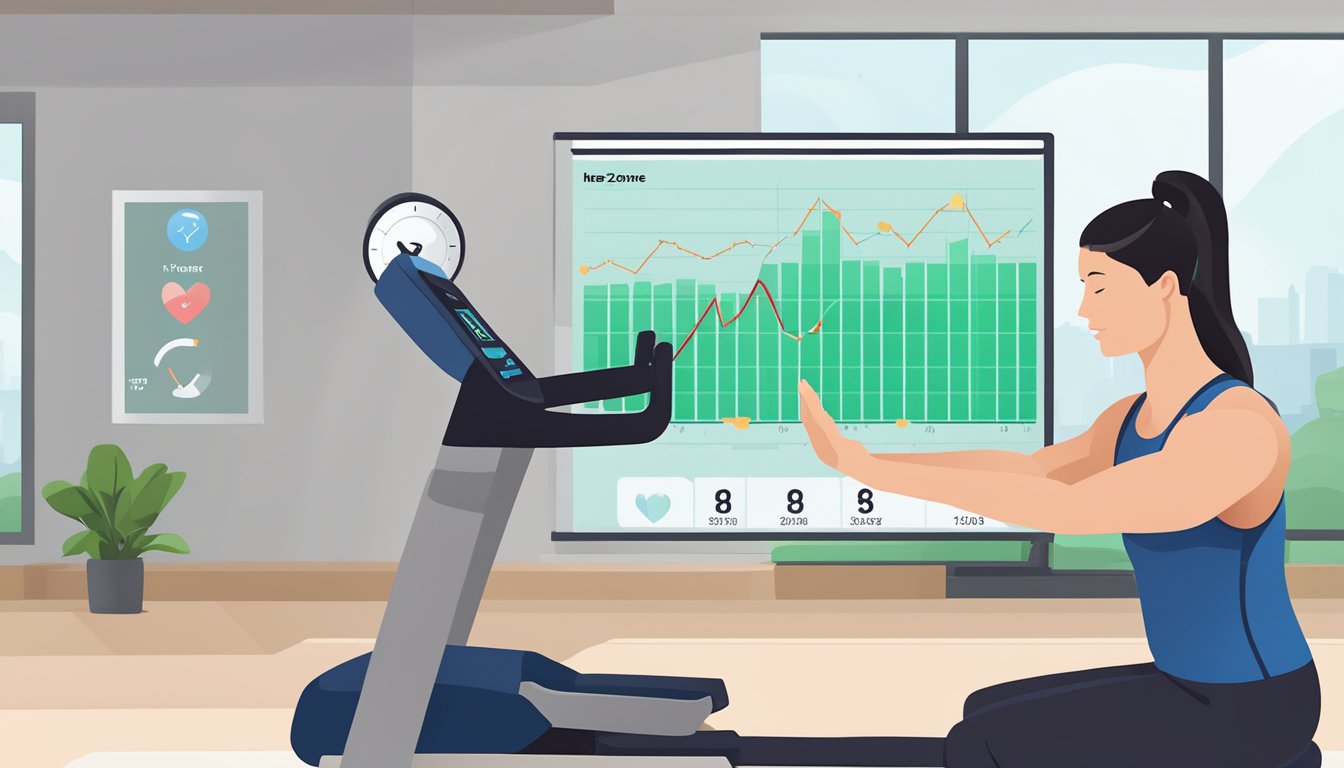
Before starting any new exercise program, it is always important to consult with a doctor or other health professional. This is especially true for individuals who have pre-existing medical conditions or are taking medications that may affect their heart rate. A doctor can help determine if heart rate training is safe and effective for an individual based on their medical history and current health status.
Adjusting for Age, Weight, and Medications
When determining heart rate zones for training, it is important to take into account an individual’s age, weight, and any medications they may be taking. As individuals age, their maximum heart rate decreases, meaning that the heart rate zones for training will also need to be adjusted. Additionally, individuals who are overweight or obese may need to adjust their heart rate zones to ensure that they are not putting too much strain on their heart. Certain medications can also affect heart rate, so it is important to consult with a doctor to determine if any adjustments need to be made to heart rate training zones.
It is also important to monitor blood pressure during heart rate training, as high blood pressure can put additional strain on the heart. Individuals with high blood pressure should consult with a doctor to determine safe heart rate zones for training.
Overall, heart rate training can be a safe and effective way to improve cardiorespiratory fitness and overall health. However, it is important to consult with a doctor and adjust heart rate zones based on age, weight, medications, and blood pressure to ensure that training is safe and effective for the individual.
Frequently Asked Questions
How does one calculate heart rate zones according to NASM guidelines?
According to NASM guidelines, heart rate zones can be calculated using the client’s age and maximum heart rate. The maximum heart rate can be calculated by subtracting the client’s age from 220. Once the maximum heart rate is determined, the training zones can be calculated as percentages of the maximum heart rate. NASM recommends four training zones, ranging from 65% to 95% of the maximum heart rate.
What is the recommended location on the body to measure resting heart rate according to NASM?
NASM recommends measuring resting heart rate at the radial artery on the wrist or at the carotid artery in the neck. The client should be at rest and the measurement should be taken for at least 30 seconds.
How many heart rate zones are identified by NASM?
NASM identifies four heart rate zones, ranging from Zone 1 (65-75% of maximum heart rate) to Zone 4 (above 95% of maximum heart rate). These zones are used to prescribe specific cardiovascular training programs for clients.
What are the age-specific considerations for NASM heart rate zones?
NASM heart rate zones take into account the client’s age and maximum heart rate. As clients age, their maximum heart rate decreases, which affects the heart rate zones. NASM recommends adjusting the heart rate zones accordingly to ensure safe and effective training.
What are NASM’s recommendations for cardiovascular exercise intensity?
NASM recommends that clients exercise at an intensity that falls within their heart rate zones. The intensity should be challenging, but not so intense that it puts the client at risk for injury or overtraining. NASM also recommends incorporating a variety of cardiovascular exercises to prevent boredom and ensure a well-rounded training program.
How do heart rate zones differ between NASM and ACSM standards?
While both NASM and ACSM use heart rate zones to prescribe cardiovascular training programs, there are some differences in their approaches. NASM recommends four heart rate zones, while ACSM recommends five. Additionally, the upper limits of the heart rate zones differ slightly between the two organizations. It is important for trainers to be familiar with both NASM and ACSM guidelines in order to provide safe and effective training programs for their clients.
Disclaimer: The information provided is for educational purposes only and should not be used as a substitute for medical advice. Always consult a healthcare professional before starting any new exercise program.