

Noradrenaline, also known as norepinephrine, is a neurotransmitter and hormone that is produced by the adrenal glands and sympathetic nervous system. It plays an important role in various physiological processes, including the regulation of blood pressure, heart rate, and cardiac output. In particular, noradrenaline has a significant effect on the heart, which is the focus of this article.
The sympathetic nervous system, which is responsible for the “fight or flight” response, stimulates the release of noradrenaline from nerve endings in the heart. This results in an increase in heart rate, contractility, and cardiac output, which helps to prepare the body for physical activity or stress. However, excessive noradrenaline release can have detrimental effects on the heart, such as arrhythmias and heart failure.
Key Takeaways
- Noradrenaline is a neurotransmitter and hormone that is produced by the adrenal glands and sympathetic nervous system.
- It plays an important role in regulating blood pressure, heart rate, and cardiac output.
- Excessive noradrenaline release can have detrimental effects on the heart, such as arrhythmias and heart failure.
Biochemical Properties and Synthesis
Chemical Structure and Metabolism
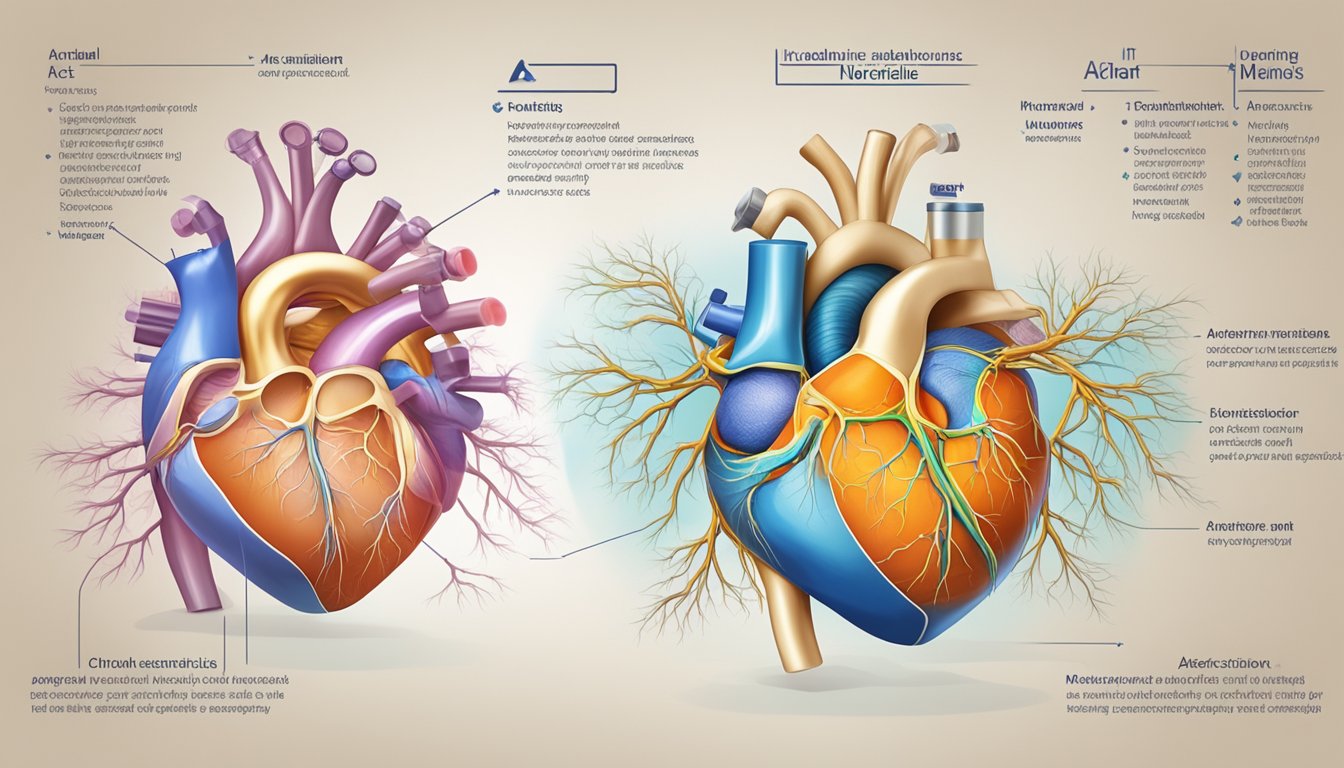
Noradrenaline, also known as norepinephrine, is a neurotransmitter and hormone that is synthesized and released by the adrenal medulla and sympathetic nerves. It is a catecholamine, a class of compounds that includes dopamine, adrenaline (epinephrine), and noradrenaline. The chemical structure of noradrenaline consists of a benzene ring with two hydroxyl groups (-OH) and an amine group (-NH2) attached to the ring.
Noradrenaline is metabolized by two enzymes, monoamine oxidase (MAO) and catechol-O-methyltransferase (COMT). MAO is found in nerve terminals and breaks down noradrenaline into its primary metabolite, 3,4-dihydroxyphenylglycol (DHPG). COMT, on the other hand, is found in the liver and other tissues and converts noradrenaline into normetanephrine.
Biosynthesis from Tyrosine
The biosynthesis of noradrenaline starts with the amino acid tyrosine. Tyrosine is converted into L-DOPA by the enzyme tyrosine hydroxylase (TH), which is the rate-limiting step in noradrenaline synthesis. L-DOPA is then converted into dopamine by the enzyme aromatic L-amino acid decarboxylase (AADC).
Dopamine is then converted into noradrenaline by the enzyme dopamine beta-hydroxylase (DBH), which adds a hydroxyl group (-OH) to the dopamine molecule. Noradrenaline is then stored in vesicles in the nerve terminals until it is released in response to a nerve impulse.
Noradrenaline has several physiological effects on the body, including increasing heart rate, cardiac contractility, vascular tone, renin-angiotensin system activity, and renal sodium reabsorption. However, excessive levels of noradrenaline can lead to hypertension, anxiety, and other cardiovascular diseases.
It is important to note that this information is intended for educational purposes only and should not be used as a substitute for professional medical advice.
Physiological Effects on Cardiac Function
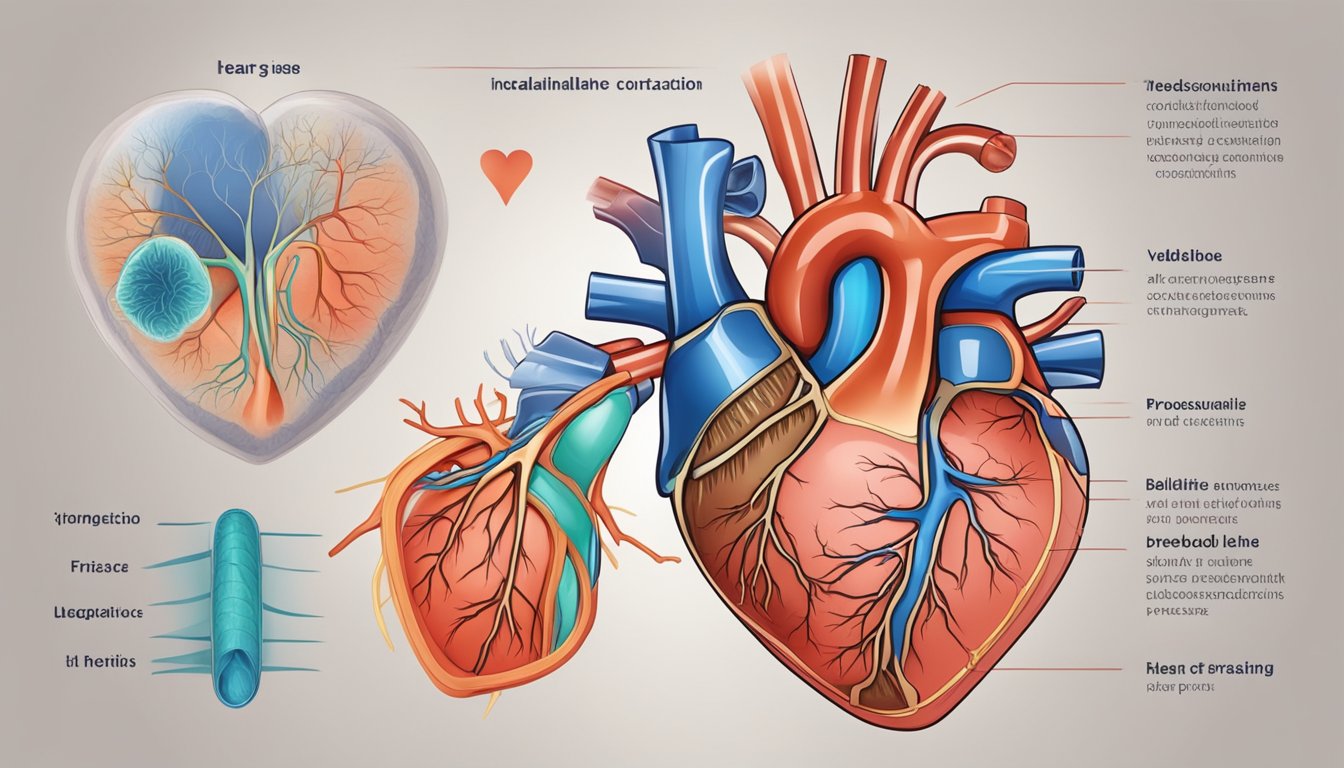
Noradrenaline, also known as norepinephrine, is a neurotransmitter and hormone that plays a crucial role in regulating the cardiovascular system. When released into the bloodstream, it acts on the heart and blood vessels to increase heart rate, contractility, and vascular tone.
Impact on Heart Rate and Contractility
Noradrenaline is a potent stimulator of the heart, increasing both heart rate and contractility. It achieves this by activating beta-adrenergic receptors in the heart, which in turn stimulate the production of cyclic adenosine monophosphate (cAMP) and activate protein kinase A (PKA). PKA then phosphorylates a number of proteins involved in cardiac excitation-contraction coupling, leading to an increase in both the rate and force of cardiac contractions.
Influence on Cardiac Output and Blood Pressure
The effects of noradrenaline on cardiac output and blood pressure are complex and multifactorial. In general, noradrenaline increases cardiac output by increasing stroke volume, which is the amount of blood pumped out of the heart with each beat. This is achieved through a combination of increased contractility and decreased afterload, which is the resistance that the heart must overcome to eject blood into the arteries.
However, noradrenaline also increases systemic vascular resistance, which is the resistance to blood flow offered by the blood vessels throughout the body. This can lead to an increase in blood pressure, which can have both beneficial and harmful effects depending on the individual and the context.
In summary, noradrenaline has a profound impact on cardiac function, increasing heart rate, contractility, and vascular tone. Its effects on cardiac output and blood pressure are complex and depend on a number of factors, including afterload, contractility, and systemic vascular resistance. While noradrenaline can have beneficial effects in some contexts, it can also be harmful in others, and its use should be carefully considered and monitored by a qualified healthcare professional.
Therapeutic Uses and Clinical Significance

Management of Hypotensive States
Noradrenaline, also known as norepinephrine, is a potent vasoconstrictor that is commonly used in the management of hypotensive states. Hypotension can be caused by a variety of factors such as hypovolemia, septic shock, and cardiogenic shock. When hypotension does not respond to fluid therapy, noradrenaline is often used as a first-line agent to increase systemic vascular resistance and blood pressure.
Studies have shown that the use of noradrenaline in the treatment of hypotensive states can significantly reduce mortality rates in critically ill patients. However, it is important to note that the use of noradrenaline should be carefully monitored in patients with pre-existing hypertension or cardiovascular disease.
Application in Cardiac Arrest and Shock
Noradrenaline is also commonly used in the treatment of cardiac arrest and shock. Cardiac arrest is a medical emergency that occurs when the heart suddenly stops beating. In this situation, noradrenaline can be used to increase blood pressure and restore circulation.
Shock is a life-threatening condition that occurs when there is a lack of oxygen and nutrients to the body’s tissues. In cases of shock, noradrenaline can be used as a vasoconstrictor to increase blood pressure and improve tissue perfusion.
It is important to note that the use of noradrenaline in the treatment of shock should be carefully monitored and adjusted based on the patient’s response. In some cases, the use of vasopressors such as noradrenaline may be contraindicated, and alternative treatments such as phentolamine should be considered.
Noradrenaline works by activating alpha-1 and alpha-2 adrenergic receptors, which results in vasoconstriction and an increase in systemic vascular resistance. The mechanism of action of noradrenaline makes it a valuable tool in the management of hypotensive states and shock.
In intensive care settings, the use of noradrenaline should be closely monitored by trained medical professionals to ensure optimal patient outcomes. It is important to note that the use of noradrenaline should be carefully considered in patients with pre-existing cardiovascular disease or hypertension.
In conclusion, noradrenaline is a powerful vasoconstrictor that is commonly used in the management of hypotensive states and shock. While the use of noradrenaline can significantly improve patient outcomes, it should be carefully monitored and adjusted based on the patient’s response.
Pharmacokinetics and Adverse Effects
Absorption, Distribution, and Elimination
Noradrenaline, also known as norepinephrine, is a neurotransmitter and hormone that is released from the adrenal glands and sympathetic nerve endings. It is used as a medication to treat hypotension and shock by increasing blood pressure and cardiac output. The pharmacokinetics of noradrenaline involve its absorption, distribution, and elimination from the body.
Noradrenaline is administered intravenously and rapidly distributed throughout the body due to its high lipophilicity. It has a half-life of approximately 2 minutes and is rapidly degraded by monoamine oxidase and catechol-O-methyltransferase. The volume of distribution of noradrenaline is approximately 1.5 L/kg, and it is primarily eliminated through renal excretion.
Contraindications and Potential Risks
Noradrenaline is contraindicated in patients with hypersensitivity to noradrenaline or any of its components. It should also be used with caution in patients with hypertension, hyperthyroidism, or diabetes mellitus. Noradrenaline should not be used in patients with peripheral vascular disease or in those with a history of severe bradycardia.
Noradrenaline can cause adverse effects such as reflex bradycardia, extravasation, and tissue necrosis if administered improperly. It should be administered through a central venous catheter to avoid extravasation, and the infusion site should be monitored regularly. If extravasation occurs, the infusion should be stopped immediately, and the affected limb should be elevated.
In conclusion, noradrenaline is a potent medication that can effectively increase blood pressure and cardiac output in patients with hypotension and shock. However, it should be used with caution in patients with certain medical conditions and administered properly to avoid potential adverse effects. It is important to consult with a healthcare professional before using noradrenaline to ensure its safe and appropriate use.
Frequently Asked Questions
How does norepinephrine influence the force of cardiac contractions?
Norepinephrine increases the force of cardiac contractions by stimulating beta-1 adrenergic receptors in the heart. This results in an increase in calcium influx into the cardiac myocytes, which enhances the contractility of the heart muscle. The increased force of contraction leads to an increase in stroke volume and cardiac output.
In what manner does norepinephrine affect systolic and diastolic blood pressure?
Norepinephrine increases both systolic and diastolic blood pressure by stimulating alpha-1 adrenergic receptors in the blood vessels. This leads to vasoconstriction and an increase in peripheral vascular resistance. The increased resistance causes an elevation in blood pressure. Norepinephrine also stimulates beta-1 adrenergic receptors in the heart, which increases cardiac output, further elevating blood pressure.
What are the distinctions between the cardiac effects of adrenaline and norepinephrine?
Adrenaline and norepinephrine both stimulate beta-1 adrenergic receptors in the heart, resulting in an increase in cardiac output. However, adrenaline also stimulates beta-2 adrenergic receptors in the blood vessels, leading to vasodilation and a decrease in peripheral vascular resistance. This results in a decrease in diastolic blood pressure, unlike norepinephrine, which increases both systolic and diastolic blood pressure.
Can norepinephrine lead to an increase in cardiac output?
Yes, norepinephrine can lead to an increase in cardiac output by stimulating beta-1 adrenergic receptors in the heart. This results in an increase in heart rate and the force of cardiac contractions, leading to an increase in stroke volume and cardiac output.
What impact does norepinephrine have on the regulation of heart rate?
Norepinephrine increases heart rate by stimulating beta-1 adrenergic receptors in the heart’s sinoatrial node. This results in an increase in the rate of depolarization and an increase in the firing rate of the sinoatrial node, leading to an increase in heart rate.
How does the administration of Levophed alter cardiac rhythm and force?
Levophed (norepinephrine) increases cardiac force and blood pressure by stimulating alpha-1 and beta-1 adrenergic receptors. This leads to an increase in peripheral vascular resistance, which elevates blood pressure. Levophed also stimulates beta-1 adrenergic receptors in the heart, resulting in an increase in cardiac output. However, Levophed can also lead to tachycardia, arrhythmias, and ischemia, especially in patients with pre-existing cardiovascular disease. Therefore, its administration requires careful monitoring and should only be done under the supervision of a medical professional.