

Smoking is one of the leading causes of heart disease, which is the leading cause of death worldwide. The chemical compounds present in tobacco smoke damage the lining of blood vessels, causing them to narrow and stiffen, leading to high blood pressure, heart attack, stroke, and other cardiovascular diseases. Even passive smoking can increase the risk of heart disease.
The impact of smoking on cardiovascular health is significant, with smokers being twice as likely to have a heart attack as non-smokers. The risk of heart disease decreases significantly after quitting smoking, with the risk of heart attack and stroke decreasing by 50% within the first year of quitting. However, the risk of heart disease does not return to that of a non-smoker until 10-15 years after quitting smoking.
Prevention and cessation strategies are essential in reducing the risk of heart disease associated with smoking. Quitting smoking is the most effective way to reduce the risk of heart disease, and there are several methods available to help smokers quit. Understanding the broader health impact of smoking is also crucial in motivating smokers to quit, as smoking not only affects the cardiovascular system but also increases the risk of lung cancer, respiratory diseases, and other health problems.
Key Takeaways
- Smoking is a leading cause of heart disease, which is the leading cause of death worldwide.
- Quitting smoking is the most effective way to reduce the risk of heart disease, with the risk decreasing significantly within the first year of quitting.
- Understanding the broader health impact of smoking is crucial in motivating smokers to quit.
The Impact of Smoking on Cardiovascular Health

Smoking is a leading cause of cardiovascular disease, which is the term used to describe a range of conditions that affect the heart and blood vessels. In this section, we will explore the correlation between smoking and heart disease, the effects of tobacco on blood vessels and blood flow, and the consequences of long-term smoking on heart health.
Correlation Between Smoking and Heart Disease
Smoking is a major risk factor for heart disease. It increases the risk of heart attack, coronary heart disease, stroke, and high blood pressure. When a person smokes, the chemicals in tobacco damage the lining of the arteries, making them more likely to become narrow and blocked. This can lead to atherosclerosis, which is the build-up of plaque in the arteries. When the arteries become narrow, it becomes harder for blood to flow through them, which can lead to a heart attack or stroke.
Effects of Tobacco on Blood Vessels and Blood Flow
Smoking affects the blood vessels in several ways. Firstly, it increases blood pressure, which puts extra strain on the heart and blood vessels. Secondly, it reduces the amount of oxygen in the blood, which can cause damage to the blood vessels and organs. Thirdly, it increases the risk of blood clots, which can block blood vessels and cause a heart attack or stroke. Finally, smoking can cause inflammation in the blood vessels, which can lead to atherosclerosis.
Consequences of Long-Term Smoking on Heart Health
Long-term smoking can have serious consequences for heart health. It can cause coronary artery disease, which is the narrowing of the arteries that supply blood to the heart. This can lead to chest pain, heart attacks, and heart failure. Smoking can also cause arrhythmia, which is an irregular heartbeat. This can be dangerous, as it can lead to sudden cardiac death.
In conclusion, smoking has a significant impact on cardiovascular health. It can cause damage to the blood vessels, increase the risk of blood clots, and lead to serious conditions such as coronary artery disease and arrhythmia. It is important for smokers to quit smoking to reduce their risk of developing these conditions.
Risks and Effects Across Different Populations

Smoking-Related Heart Disease in Women and Men
Smoking is a major risk factor for heart disease in both women and men. However, women who smoke are at a higher risk of developing heart disease than men who smoke. This is because smoking can affect women’s hormones, leading to an increased risk of blood clots when combined with birth control pills. Obesity can also exacerbate the risk of heart disease in women who smoke.
Men who smoke are also at a higher risk of developing heart disease than non-smoking men. Smoking can lead to the buildup of plaque in the arteries, which can cause them to narrow and harden. This can lead to a heart attack or stroke. Men who smoke are also more likely to have high blood pressure, which can further increase their risk of heart disease.
Impact of Secondhand Smoke on Non-Smokers
Secondhand smoke can also have a significant impact on non-smokers. Exposure to secondhand smoke can cause the same health problems as smoking, including heart disease. Non-smokers who are exposed to secondhand smoke are also at an increased risk of developing lung cancer.
Smoking and Heart Disease in Younger Adults
Smoking can have a significant impact on younger adults, increasing their risk of heart disease. Younger adults who smoke are more likely to have a heart attack or stroke than non-smokers. This is because smoking can cause the arteries to narrow and harden, making it more difficult for blood to flow through them.
It is important for younger adults to quit smoking as soon as possible to reduce their risk of heart disease. Preventive measures such as avoiding smoking in public places and encouraging smokers to quit can help reduce the risk of heart disease in the general population.
Disclaimer: The information provided is for educational purposes only and should not be used as a substitute for medical advice. It is important to consult a healthcare professional for advice on smoking cessation and the prevention and treatment of heart disease.
Prevention and Cessation Strategies

Smoking is a leading cause of heart disease, and quitting smoking is one of the most effective ways to reduce the risk of developing heart disease. The benefits of quitting smoking for heart health are numerous, and support and resources are available to help individuals quit.
Benefits of Quitting Smoking for Heart Health
Quitting smoking can have immediate and long-term benefits for heart health. According to the American Heart Association, within just 20 minutes of quitting smoking, heart rate and blood pressure begin to drop. Within 1 year, the risk of heart disease is reduced by half, and within 15 years, the risk of heart disease is similar to that of a non-smoker.
Nicotine is the addictive substance in tobacco products, and withdrawal symptoms can make quitting smoking difficult. However, support and resources are available to help individuals quit. The Surgeon General recommends using a combination of behavioural therapy and medication, such as gum or a patch, to increase the chances of successfully quitting smoking.
Support and Resources for Smoking Cessation
The American Heart Association provides a variety of resources to help individuals quit smoking and improve heart health. These resources include information on how tobacco smoke causes disease, the health consequences of smoking, and the benefits of quitting smoking for heart health.
In addition to the resources provided by the American Heart Association, support is available through healthcare professionals, quitlines, and online resources. Exercise and stress reduction techniques can also be helpful in managing withdrawal symptoms and reducing the risk of relapse.
It is important to note that quitting smoking is a difficult process, and relapse is common. However, with the right support and resources, individuals can successfully quit smoking and reduce their risk of heart disease. As with any medical condition, individuals should consult with their healthcare professional before making any changes to their treatment plan.
Understanding the Broader Health Impact
Comorbid Conditions Associated with Smoking
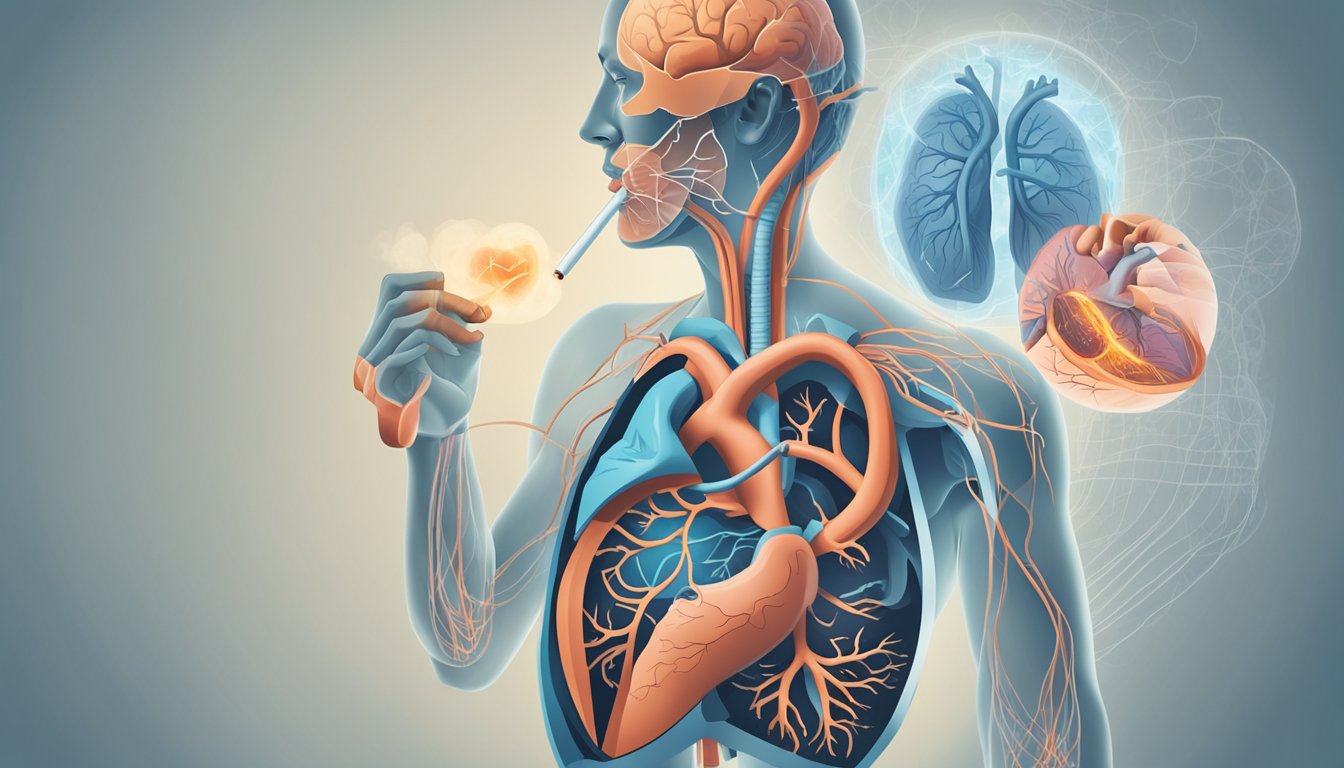
Smoking is a preventable cause of many health risks, including heart disease. In addition to heart disease, smoking is also linked to cancer, lung disease, and peripheral artery disease. Smoking can cause narrowing of the blood vessels in various organs, including the legs and arms, leading to reduced blood supply and weakness.
Smoking also increases the risk of inflammation and blood clots, which can lead to chest pain and stroke. Carbon monoxide, a toxic gas in cigarette smoke, can reduce the amount of oxygen that the blood can carry, leading to shortness of breath and fatigue.
Smoking is also linked to hypertension, which is a major risk factor for heart disease. Hypertension can damage the coronary arteries, leading to a heart attack or stroke.
The Global Burden of Smoking-Related Diseases
Smoking is a major public health issue, and its impact is felt worldwide. According to the Centers for Disease Control and Prevention (CDC), smoking is responsible for more than 7 million deaths each year worldwide. This includes deaths from lung cancer, heart disease, and other smoking-related illnesses.
In addition to the health impact, smoking also has a significant economic impact. The cost of treating smoking-related illnesses is high, and smoking-related disabilities can have a major impact on productivity.
It is important to note that smoking is a preventable cause of many health issues, and quitting smoking can have a significant impact on overall health and well-being. While it can be difficult to quit smoking, there are many resources available to help individuals quit, including nicotine replacement therapy, counselling, and support groups.
Disclaimer: The information provided in this section is for educational purposes only and is not intended to be a substitute for professional medical advice, diagnosis, or treatment. Always seek the advice of your physician or other qualified health provider with any questions you may have regarding a medical condition.
Frequently Asked Questions

What are the cardiovascular risks associated with tobacco use?
Tobacco use is a major risk factor for cardiovascular diseases, including heart disease and stroke. The chemicals in tobacco smoke cause damage to the heart and blood vessels, leading to atherosclerosis, or the buildup of plaque in the arteries. This can cause the arteries to narrow and harden, making it difficult for blood to flow through them. Smoking also increases blood pressure and heart rate, and makes the blood more likely to clot, which can lead to heart attacks and strokes.
How does second-hand smoke exposure influence heart disease risk?
Exposure to second-hand smoke can also increase the risk of heart disease, as the chemicals in tobacco smoke can be just as harmful to non-smokers as they are to smokers. Second-hand smoke can damage the lining of the blood vessels, making them more likely to narrow and harden. This can increase the risk of heart disease, stroke, and other cardiovascular problems.
Can cessation of smoking reverse damage to the heart?
Quitting smoking can help to reduce the risk of heart disease and other cardiovascular problems. While the damage caused by smoking may not be completely reversible, quitting smoking can slow down the progression of atherosclerosis and reduce the risk of heart attacks and strokes. It is important to note that the benefits of quitting smoking are greatest when it is done as early as possible.
What is the impact of long-term smoking on heart disease prognosis?
Long-term smoking can have a significant impact on the prognosis of heart disease. Smokers who have heart disease are more likely to experience complications and have a poorer prognosis than non-smokers with the same condition. However, quitting smoking can help to improve the prognosis and reduce the risk of further complications.
How does the combination of smoking and other lifestyle factors affect cardiac health?
Smoking is just one of many lifestyle factors that can affect cardiac health. Other factors, such as poor diet, lack of exercise, and stress, can also increase the risk of heart disease. When combined with smoking, these factors can have a synergistic effect, increasing the risk of heart disease even further. It is important to address all of these factors in order to reduce the risk of heart disease and improve overall health.
Are there particular smoking cessation methods recommended for individuals with heart conditions?
There are a variety of smoking cessation methods available, including nicotine replacement therapy, medication, and behavioural therapy. For individuals with heart conditions, it is important to consult with a healthcare professional before starting any smoking cessation program, as some methods may be more appropriate than others. It is also important to note that quitting smoking can cause temporary withdrawal symptoms, which can be managed with the help of a healthcare professional.