

Foetal heart rate refers to the number of times a baby’s heart beats per minute while in the womb. It is a critical indicator of fetal well-being and development. The normal range of foetal heart rate varies during gestation, increasing from around 120 to 160 beats per minute (bpm) at 6 weeks and peaking at around 170 bpm at 10 weeks. Afterward, it begins a rapid deceleration to the normal fetal heart rate for mid-pregnancy, between 110 to 160 bpm.
Foetal heart rate monitoring is a standard procedure during pregnancy and labour to assess the baby’s health. The healthcare provider will use a fetal doppler or a fetal monitor to listen to the baby’s heart rate. During labour, the healthcare provider may also use internal fetal monitoring to obtain a more accurate reading of the heart rate. The average foetal heart rate is between 110 and 160 bpm, and it can vary by 5 to 25 beats per minute. Any significant deviation from the normal range may indicate potential complications and requires further evaluation.
Key Takeaways:
- Foetal heart rate is a critical indicator of fetal well-being and development.
- Foetal heart rate monitoring is a standard procedure during pregnancy and labour to assess the baby’s health.
- Any significant deviation from the normal range may indicate potential complications and requires further evaluation.
Fundamentals of Foetal Heart Rate
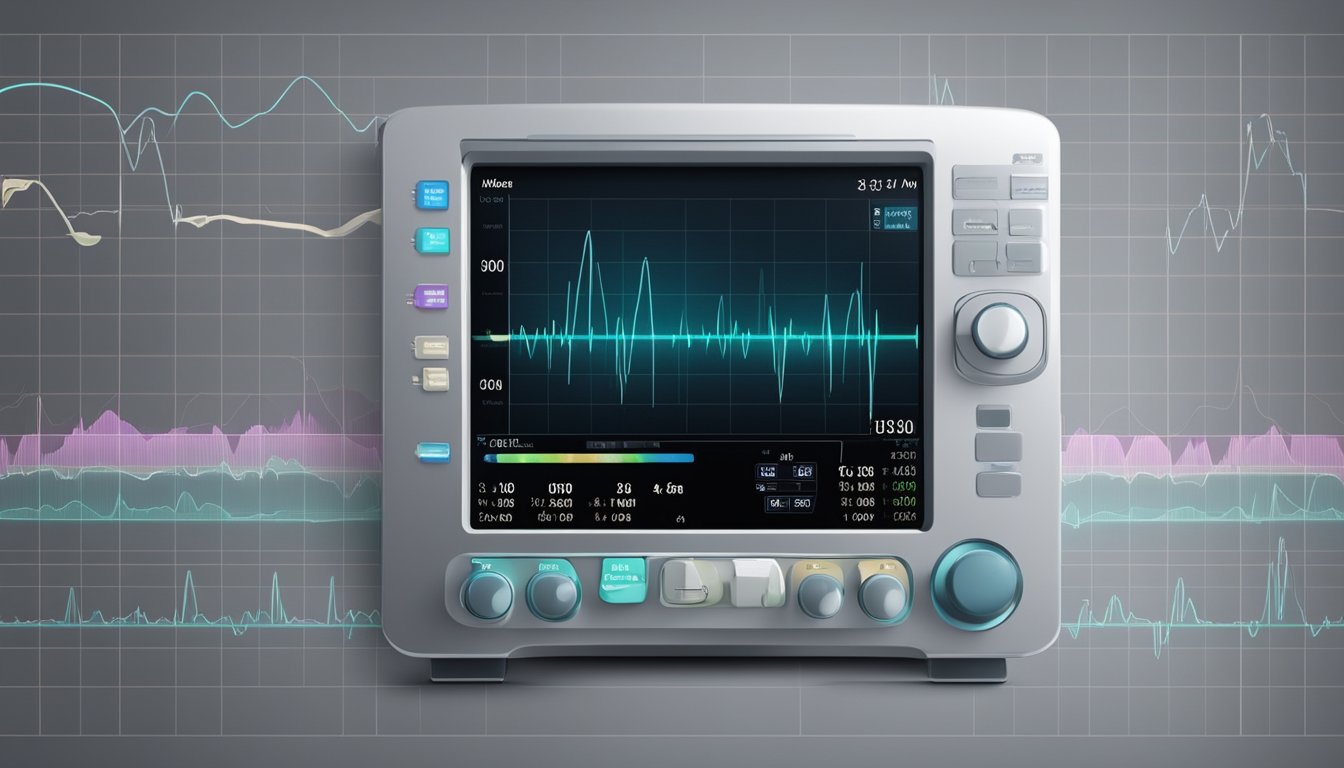
Foetal heart rate (FHR) is the number of times the heart of the foetus beats per minute. It is an important indicator of the foetus’s health and well-being. FHR can be monitored using ultrasound or a foetal heart rate monitor.
Normal Foetal Heart Rate Parameters
The normal range for foetal heart rate is between 110 and 160 beats per minute (BPM). During the early stages of pregnancy, the heart rate is typically around 110 BPM, and it can increase to 140-170 BPM around the ninth week. After this period, the heart rate slows down to around 110-160 BPM. It is important to note that there can be variations in the heart rate of the foetus, and this can be due to several factors such as the activity level of the foetus, gestational age, and maternal health.
Importance of Monitoring Foetal Heart Rate
Monitoring foetal heart rate is crucial in ensuring the well-being of the foetus. It helps detect any abnormalities in the heart rate, which can indicate a problem with the foetus’s health. Continuous monitoring of foetal heart rate during labour can also help detect any distress in the foetus, which can be an indication for emergency intervention.
It is important to note that foetal heart rate monitoring should only be done by a trained medical professional. Any concerns regarding the foetal heart rate should be discussed with a healthcare provider.
In conclusion, foetal heart rate is an important indicator of the foetus’s health and well-being. Normal foetal heart rate parameters range between 110 and 160 BPM, with variations due to several factors. Monitoring foetal heart rate is crucial in ensuring the well-being of the foetus, and it should only be done by a trained medical professional.
Monitoring Techniques and Procedures

Non-Invasive Methods
Non-invasive methods of fetal heart rate monitoring involve the use of external sensors to measure the fetal heart rate. One such method is Doppler ultrasound, which uses sound waves to detect the fetal heartbeat. Another non-invasive method is the non-stress test, which measures the fetal heart rate in response to the baby’s movements.
Invasive Methods
Invasive methods of fetal heart rate monitoring involve the insertion of a sensor directly into the uterus. This method is typically used when non-invasive methods are not effective or when there is a need for continuous monitoring. One such method is electronic fetal monitoring, which involves the insertion of a sensor through the cervix and into the uterus to measure the fetal heart rate and the strength and duration of contractions.
Interpreting Monitoring Results
Interpreting monitoring results requires a trained healthcare professional. The results of fetal heart rate monitoring can provide information about the baby’s well-being and can help determine whether intervention is necessary. A biophysical profile may also be used to assess the baby’s overall health by evaluating the fetal heart rate, fetal movements, fetal breathing, and the amount of amniotic fluid.
It is important to note that fetal heart rate monitoring is not always accurate and can sometimes lead to unnecessary interventions. It is important to discuss the risks and benefits of fetal heart rate monitoring with a healthcare professional.
Disclaimer: The information provided is for educational purposes only and is not intended as medical advice. Always consult a healthcare professional for diagnosis and treatment.
Foetal Heart Rate During Labour and Delivery

Monitoring During Labour
Foetal heart rate (FHR) monitoring is a crucial aspect of antenatal care. During labour, FHR monitoring is used to assess the well-being of the foetus and detect any signs of distress. The FHR can be monitored either intermittently or continuously, depending on the needs of the mother and the foetus.
Intermittent monitoring involves checking the FHR at regular intervals, usually every 30 minutes during the first stage of labour and every 15 minutes during the second stage. Continuous monitoring involves using electronic equipment to measure the FHR throughout labour.
FHR monitoring can be done externally or internally. External monitoring involves placing a device called a tocodynamometer on the mother’s abdomen to measure uterine contractions and a Doppler ultrasound device to measure the FHR. Internal monitoring involves placing a small electrode on the foetal scalp to measure the FHR directly.
Identifying and Managing Foetal Distress
FHR monitoring can help identify foetal distress, which is a condition where the foetus is not receiving enough oxygen. Foetal distress can be caused by various factors, such as prolonged labour, preterm labour, uterine contractions, and maternal health conditions.
If foetal distress is detected, the healthcare provider may recommend interventions to manage the condition. These interventions may include changing the mother’s position, administering oxygen to the mother, or performing an emergency caesarean section.
It is important to note that FHR monitoring is not always accurate in predicting foetal distress, and false-positive results can occur. Therefore, healthcare providers must use their clinical judgment to interpret FHR patterns and make appropriate decisions.
Disclaimer: This article is for informational purposes only and should not be used as a substitute for professional medical advice. If you have any concerns about your pregnancy or labour, please consult your healthcare provider.
Potential Complications and Considerations

Abnormal Foetal Heart Rate Patterns
Abnormal foetal heart rate patterns can be indicative of foetal distress and can be a sign of an underlying problem. Bradycardia, a slow heart rate, and tachycardia, a fast heart rate, are two common abnormal foetal heart rate patterns. Bradycardia can be caused by infection, medication, or problems with the placenta. Tachycardia can be caused by maternal fever, infection, or fetal anaemia. It is important to monitor these patterns closely and consult with a medical professional if they are detected.
Risks Associated with Monitoring
Foetal heart rate monitoring is an important procedure to ensure the health of the foetus during pregnancy and delivery. However, there are risks associated with monitoring, including false positives, which can lead to unnecessary interventions, and false negatives, which can result in missed opportunities for intervention. It is important for medical professionals to be aware of these risks and to use monitoring as part of a comprehensive approach to managing high-risk pregnancies.
Guidelines for High-Risk Pregnancies
High-risk pregnancies require special considerations when it comes to foetal heart rate monitoring. Women with high-risk pregnancies, such as those with pre-existing medical conditions or a history of complications, may require more frequent monitoring to ensure the health of the foetus. Guidelines for high-risk pregnancies should be followed closely to ensure that the foetus is receiving the appropriate level of care.
In conclusion, foetal heart rate monitoring is an important tool for ensuring the health of the foetus during pregnancy and delivery. However, there are potential complications and considerations that must be taken into account when interpreting foetal heart rate patterns and monitoring high-risk pregnancies. It is important for medical professionals to be aware of these factors and to use monitoring as part of a comprehensive approach to managing high-risk pregnancies.
Frequently Asked Questions

What is the significance of foetal heart rate in determining gender?
There is no evidence to suggest that foetal heart rate can be used to determine the gender of a baby. This is a common misconception, but there is no scientific basis for it.
At which stage of pregnancy does the foetal heartbeat typically commence?
The foetal heartbeat typically begins around 6 weeks of gestation, but it may not be detectable until later in the first trimester.
What constitutes a normal range for foetal heart rate?
A normal foetal heart rate is between 110 and 160 beats per minute (BPM). However, it is important to note that there can be variations in foetal heart rate, and what is considered normal can vary depending on the gestational age of the foetus.
How does foetal heart rate vary by gestational week?
During the first trimester, the foetal heart rate is typically between 110 and 170 BPM. It gradually decreases as the pregnancy progresses, and by the third trimester, it is usually between 120 and 160 BPM.
Is a foetal heart rate of 170 beats per minute considered abnormal?
A foetal heart rate of 170 BPM can be within the normal range, especially during early pregnancy. However, if the heart rate remains consistently high, it may be a sign of fetal distress and should be evaluated by a medical professional.
Can the foetal heart rate predict the sex of the baby with accuracy?
There is no scientific evidence to suggest that foetal heart rate can accurately predict the sex of a baby. Any claims to the contrary are not supported by medical research and should be viewed with skepticism.
It is important to note that while foetal heart rate can provide valuable information about the health of a foetus, it should always be interpreted in conjunction with other clinical findings. If you have any concerns about your pregnancy or the health of your foetus, you should speak to a medical professional.