

Heart failure is a chronic condition that affects millions of people worldwide. It occurs when the heart is unable to pump enough blood to meet the body’s needs. Heart failure is a progressive disease that can be divided into four stages, each with its own set of symptoms and treatment options.
Understanding the stages of heart failure is critical to managing the disease effectively. The four stages of heart failure range from mild to severe, with each stage indicating the progression of the disease. In the early stages, patients may experience few or no symptoms, while in the later stages, the symptoms can be severe and life-threatening.
Diagnosis and staging of heart failure is based on several factors, including the patient’s symptoms, physical exam, and medical history. Tests such as echocardiography, electrocardiogram, and blood tests may also be used to diagnose and stage heart failure. Once diagnosed, treatment options may include lifestyle changes, medications, or surgery, depending on the stage of the disease.
Key Takeaways
- Heart failure is a chronic condition that affects the heart’s ability to pump blood effectively.
- The disease can be divided into four stages, with each stage indicating the progression of the disease.
- Diagnosis and staging of heart failure is critical to managing the disease effectively, and treatment options may include medication, lifestyle changes, or surgery.
Understanding Heart Failure
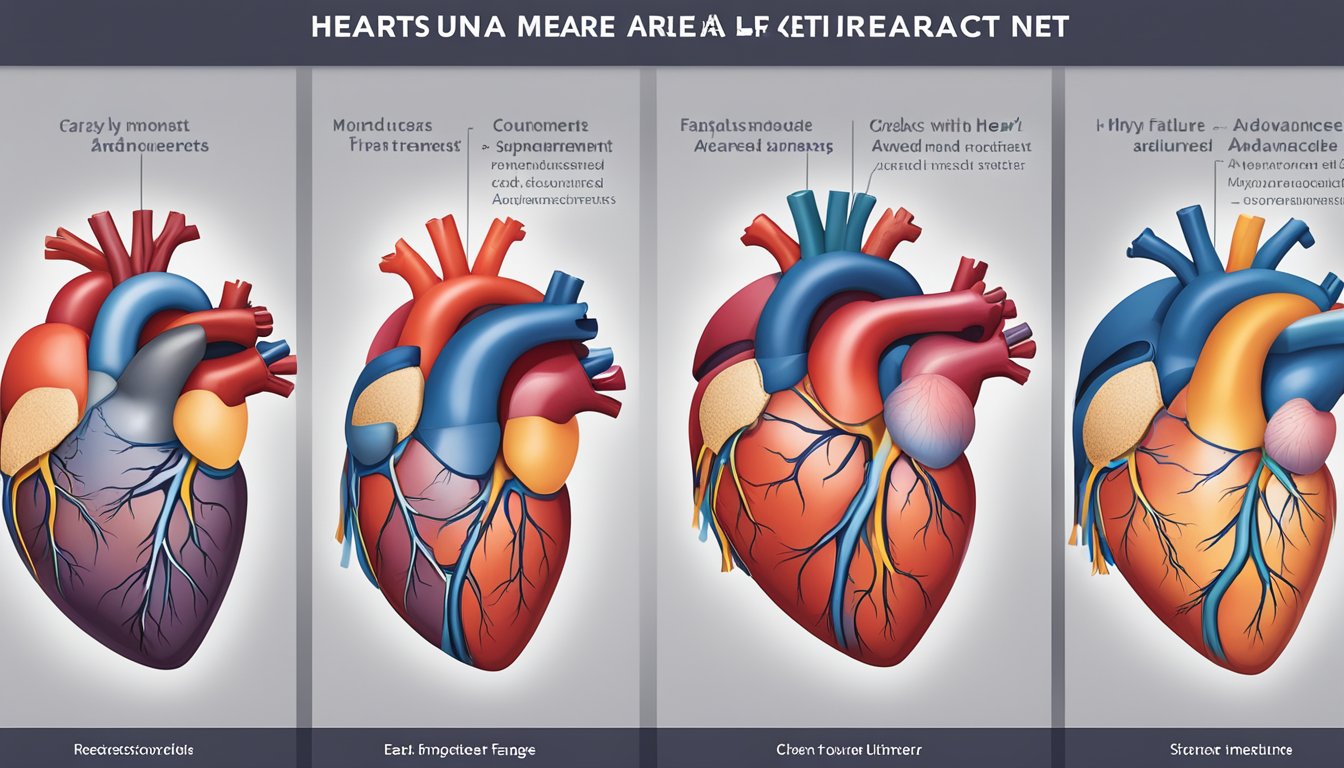
Heart failure is a chronic and progressive condition that occurs when the heart muscle is unable to pump enough blood to meet the body’s needs. It is a serious condition that affects millions of people worldwide and is a leading cause of hospitalisation and death.
Causes and Risk Factors
Heart failure can be caused by a variety of factors, including high blood pressure, diabetes, obesity, coronary artery disease, and structural heart disease. Other factors that can increase the risk of heart failure include alcohol consumption, smoking, and a family history of heart disease.
Heart Failure Classification
Heart failure is classified into four stages by the American Heart Association and American College of Cardiology. These stages are based on the severity of symptoms and the extent of heart damage. The four stages are:
- Stage A: Patients at high risk of developing heart failure due to underlying conditions such as hypertension, diabetes, or a family history of heart disease.
- Stage B: Patients with structural heart disease, such as a previous heart attack or abnormal heart valves, but without symptoms of heart failure.
- Stage C: Patients with structural heart disease and symptoms of heart failure, such as shortness of breath, fatigue, and swelling in the legs.
- Stage D: Patients with severe symptoms of heart failure that are not responding to standard treatments, such as advanced heart failure, requiring specialized interventions.
Pathophysiology of Heart Failure
Heart failure occurs when the heart muscle is damaged or weakened, making it difficult for the heart to pump blood effectively. This can result in a buildup of fluid in the lungs and other parts of the body, leading to symptoms such as shortness of breath, fatigue, and swelling in the legs.
The pathophysiology of heart failure involves a complex interplay between several factors, including changes in the heart muscle, alterations in the nervous system, and changes in the body’s hormonal balance. These changes can lead to further damage to the heart muscle and worsening of symptoms over time.
It is important to note that heart failure is a serious condition that requires prompt medical attention. Patients with symptoms of heart failure should seek medical advice as soon as possible to receive appropriate treatment and management.
Diagnosis and Staging

Heart failure is a chronic condition that affects millions of people worldwide. The diagnosis and staging of heart failure is essential for determining the appropriate treatment and management strategies. The diagnosis of heart failure is based on a combination of clinical symptoms, physical examination, and diagnostic tests.
Diagnostic Tests
Diagnostic tests are used to confirm the diagnosis of heart failure and assess the severity of the condition. These tests include echocardiogram, electrocardiogram (ECG), blood tests, MRI, and chest X-ray. An echocardiogram is a non-invasive test that uses ultrasound to create images of the heart. It is used to measure the ejection fraction, which is the percentage of blood that is pumped out of the heart with each heartbeat. An ejection fraction of less than 40% is considered a sign of heart failure.
Blood tests are used to measure the levels of brain natriuretic peptide (BNP) and N-terminal pro-BNP (NT-proBNP), which are hormones released by the heart in response to stress. Elevated levels of these hormones are indicative of heart failure.
An electrocardiogram (ECG) is a test that measures the electrical activity of the heart. It is used to detect abnormal heart rhythms and other signs of heart damage. An MRI and chest X-ray are also used to assess the structure and function of the heart.
Stages A to D
The American Heart Association has classified heart failure into four stages: A, B, C, and D. Each stage is based on the severity of symptoms and the progression of the disease.
Stage A is the earliest stage of heart failure, where there are no symptoms or signs of heart failure, but the patient is at risk of developing the condition. Patients in this stage may have risk factors such as hypertension, diabetes, or a family history of heart disease.
Stage B is characterized by structural heart disease, such as an enlarged heart or thickened walls, but no symptoms of heart failure.
Stage C is when patients have symptoms of heart failure, such as shortness of breath, fatigue, and swelling in the legs. At this stage, patients may have a reduced ejection fraction and require treatment with medications such as ACE inhibitors, beta-blockers, and diuretics.
Stage D is the most severe stage of heart failure, where patients have advanced symptoms despite treatment with medications. Patients in this stage may require advanced therapies such as heart transplantation or mechanical circulatory support.
It is important to note that heart failure is a complex condition, and the classification of stages is not always straightforward. Patients may move between stages as their condition progresses or improves. Additionally, the New York Heart Association functional class is another way of assessing the severity of heart failure, which is based on the patient’s ability to perform physical activity.
In conclusion, the diagnosis and staging of heart failure is essential for determining the appropriate treatment and management strategies. Diagnostic tests such as echocardiogram, blood tests, and electrocardiogram are used to confirm the diagnosis and assess the severity of the condition. The American Heart Association has classified heart failure into four stages: A, B, C, and D, based on the severity of symptoms and the progression of the disease. However, it is important to note that heart failure is a complex condition, and patients may move between stages as their condition progresses or improves.
Management and Treatment

Medical Treatment
Medical treatment for heart failure aims to reduce symptoms, improve quality of life, and slow the progression of the disease. The treatment plan will depend on the stage of heart failure, as well as the individual’s overall health and medical history.
Medications such as ACE inhibitors, ARBs, and ARNIs are commonly used to treat heart failure. These medications work by dilating blood vessels, reducing blood pressure, and improving blood flow to the heart. Diuretics may also be prescribed to reduce fluid buildup in the body.
In advanced heart failure cases, a heart transplant may be necessary. This involves replacing the damaged heart with a healthy donor heart. However, this is a complex procedure that is only recommended in severe cases.
Lifestyle and Home Remedies
Lifestyle changes can also help manage heart failure symptoms and improve overall health. These changes may include:
- Regular exercise: Exercise can help strengthen the heart and improve cardiovascular health. However, it is important to consult with a healthcare professional before starting an exercise program.
- Weight management: Maintaining a healthy weight can reduce the workload on the heart and improve heart function.
- Diet: A heart-healthy diet that is low in sodium and rich in fruits, vegetables, and whole grains can help manage heart failure symptoms.
- Fluid and sodium restriction: Limiting fluid and sodium intake can help reduce fluid buildup in the body and improve heart function.
Advanced Therapies
In some cases, advanced therapies may be necessary to manage heart failure symptoms. These may include:
- Implantable devices: Devices such as pacemakers and implantable cardioverter-defibrillators (ICDs) can help regulate heart rhythm and prevent sudden cardiac arrest.
- Cardiac resynchronization therapy (CRT): CRT involves implanting a device that helps synchronize the contractions of the heart’s chambers, improving heart function.
- Ventricular assist devices (VADs): VADs are mechanical pumps that help support heart function in advanced heart failure cases.
It is important to work closely with a healthcare professional to develop a treatment plan that is tailored to the individual’s specific needs and medical history.
Living with Heart Failure
Living with heart failure can be challenging, but with proper care and support, patients can manage their symptoms and improve their quality of life. This section discusses daily life and support, as well as monitoring and follow-up care for patients with heart failure.
Daily Life and Support
Patients with heart failure may experience physical limitations and fatigue, making it difficult to perform daily activities. It is important to conserve energy and avoid overexertion. Patients should also maintain a healthy diet and avoid excess salt intake, which can cause fluid retention and worsen symptoms.
Support from family and friends can also be helpful in managing heart failure. Patients should communicate their needs and limitations to their loved ones and seek emotional support when needed. Additionally, joining a support group for heart failure patients can provide a sense of community and understanding.
Monitoring and Follow-Up Care
Regular monitoring and follow-up care are essential for managing heart failure. Patients should monitor their blood pressure and weight regularly and report any changes to their doctor. Shortness of breath, swelling, cough, or difficulty breathing should also be reported to the doctor.
Patients with heart failure may require oxygen therapy, which can be administered at home or in the hospital. Hospitalization may also be necessary for patients with severe symptoms or complications.
Patients with heart failure should see a cardiologist regularly for follow-up care. The cardiologist may adjust medication dosages or recommend additional treatments based on the patient’s condition and progression of the disease. It is important to follow the treatment plan and attend all appointments to manage heart failure effectively.
In conclusion, living with heart failure requires proper care and support. Patients should maintain a healthy lifestyle, seek emotional support, and attend regular follow-up appointments with their doctor. With proper management, patients with heart failure can improve their quality of life and increase their life expectancy. However, it is important to note that heart failure is a serious condition and can lead to hospitalizations and complications. Patients should seek medical attention immediately if they experience any changes in symptoms.
Getting assessed in Singapore
In Singapore, ongoing cardiovascular management is shared between primary care and cardiology. Many people have blood pressure, cholesterol and diabetes reviewed by a GP or polyclinic, with specialist input where a cardiac problem is suspected or already diagnosed. Referral can be arranged through primary care, or a private clinic can be contacted directly.
If this is relevant to your own situation, you can read what is involved in an echocardiogram or a consultation for suspected heart conditions, or browse the cardiac services list.
Frequently Asked Questions
What are the common symptoms indicating the progression of heart failure?
The symptoms of heart failure can vary from person to person. However, there are some common symptoms that can indicate the progression of heart failure. These include shortness of breath, fatigue, swelling in the legs and ankles, coughing, and wheezing. If you experience any of these symptoms, it is important to speak with your doctor immediately.
How does life expectancy vary across different stages of heart failure?
Life expectancy for individuals with heart failure varies depending on the stage of the disease. In general, individuals with stage A heart failure have a normal life expectancy. Those with stage B heart failure have a slightly reduced life expectancy, while those with stage C and D heart failure have a significantly reduced life expectancy. However, it is important to note that life expectancy can vary depending on a variety of factors, including age, overall health, and access to medical care.
What constitutes the final stage of heart failure?
The final stage of heart failure is known as stage D. At this stage, the heart is severely damaged and is no longer able to pump blood effectively. Individuals with stage D heart failure may require advanced medical treatment, such as heart transplant or mechanical circulatory support.
Is it possible to improve one’s condition after a diagnosis of heart failure?
While heart failure is a chronic condition, it is possible to improve one’s condition with proper medical treatment and lifestyle changes. Treatment may include medication, lifestyle changes such as a heart-healthy diet and exercise, and in some cases, surgery. It is important to work closely with your doctor to develop a treatment plan that is right for you.
What clinical signs suggest a deterioration of heart failure in elderly patients?
Elderly patients with heart failure may experience a variety of clinical signs that suggest a deterioration of their condition. These may include increased shortness of breath, decreased exercise tolerance, worsening fatigue, and increased swelling in the legs and ankles. It is important for elderly patients with heart failure to be monitored closely by their doctor to ensure that their condition does not worsen.
How are the stages of heart failure characterised and differentiated?
The stages of heart failure are characterised and differentiated based on the severity of the disease and the presence of symptoms. In general, there are four stages of heart failure – A, B, C, and D. Stage A heart failure refers to individuals who are at high risk for developing heart failure but do not have any symptoms. Stage B heart failure refers to individuals who have structural heart disease but no symptoms. Stage C heart failure refers to individuals who have structural heart disease and symptoms of heart failure. Stage D heart failure refers to individuals who have advanced heart failure and require specialized treatment. It is important to note that the stages of heart failure are not always linear and can vary depending on the individual.
Please note that this information is intended for educational purposes only and should not be used as a substitute for medical advice. If you have any concerns about your health, please speak with your doctor.
Further reading
- HealthHub — Understanding Heart Failure
- National Heart Centre Singapore — Conditions & Treatments
- SingHealth — Conditions & Treatments
Disclaimer: This article is general information about cardiovascular health. It is not medical advice, diagnosis or treatment, and reading it does not create a doctor–patient relationship. Always seek the advice of your doctor or another qualified health professional with any questions you have about a medical condition, and never disregard or delay seeking medical advice because of something you have read here. If you think you may be having a medical emergency, call 995 or go to the nearest emergency department.