

The location of the human heart is a topic of great interest to many people. The heart is one of the most important organs in the human body, responsible for pumping blood and oxygen to all parts of the body. Understanding the location of the heart is important for both medical professionals and the general public.
The human heart is located in the chest, slightly left of center, behind the breastbone. It is a muscular organ that is roughly the size of a fist. The heart is surrounded by the pericardium, a sac that contains fluid to help protect it from injury.
The heart is divided into four chambers, each of which has a specific function. Blood flows through the heart in a specific pattern, controlled by a series of valves and circulatory connections. Understanding the location and function of the heart is essential for maintaining good health.
Key Takeaways
- The human heart is located in the chest, slightly left of center, behind the breastbone.
- The heart is a muscular organ that is roughly the size of a fist and is surrounded by the pericardium.
- The heart is divided into four chambers, each of which has a specific function, and blood flows through the heart in a specific pattern, controlled by a series of valves and circulatory connections.
Anatomical Position of the Heart

General Location
The heart is a vital organ located in the chest cavity, specifically in the mediastinum, which is the central compartment of the thoracic cavity. It is situated between the lungs, and its base lies just below the second rib. The apex of the heart is located at the fifth intercostal space, approximately 8 cm from the midline of the sternum. The heart is held in place by the pericardium, a double-layered sac that surrounds and protects it.
Orientation and Structure
The heart is roughly the size of a closed fist and is divided into four chambers: two atria and two ventricles. The right atrium and ventricle are responsible for pumping deoxygenated blood to the lungs, while the left atrium and ventricle pump oxygenated blood to the rest of the body. The heart is made up of three layers: the epicardium, the myocardium, and the endocardium. The epicardium is the outermost layer of the heart, while the myocardium is the middle layer and is composed of cardiac muscle. The endocardium is the innermost layer and lines the chambers and valves of the heart.
The heart is located just above the diaphragm, which is a large, dome-shaped muscle that separates the thoracic cavity from the abdominal cavity. The sternum, or breastbone, is located in the anterior (front) part of the chest and helps protect the heart and other vital organs. The heart is situated in such a way that it is tilted slightly to the left, and the apex is directed towards the left hip.
In conclusion, the heart is a complex organ with a crucial role in the circulatory system. Its location and structure are essential to its function, and understanding these factors is important for maintaining heart health. It is important to note that any medical concerns or questions regarding the heart should be addressed by a qualified medical professional.
Heart Chambers and Valves

Chambers of the Heart
The human heart is divided into four chambers: two atria and two ventricles. The atria are the upper chambers of the heart, while the ventricles are the lower chambers. The right atrium receives deoxygenated blood from the body, while the left atrium receives oxygenated blood from the lungs. The right ventricle pumps deoxygenated blood to the lungs for oxygenation, while the left ventricle pumps oxygenated blood to the rest of the body.
The septum is a tissue wall separating the left and right chambers. The interatrial septum separates the left and right atria, while the interventricular septum separates the left and right ventricles.
Heart Valves
The heart has four valves that regulate the flow of blood through the chambers: the tricuspid valve, the mitral valve, the pulmonary valve, and the aortic valve. The atrioventricular (AV) valves, the tricuspid valve on the right side and the mitral valve on the left side, separate the atria from the ventricles. The semilunar valves, the pulmonary valve on the right side and the aortic valve on the left side, separate the ventricles from the arteries.
The tricuspid valve is located between the right atrium and right ventricle, while the mitral valve is located between the left atrium and left ventricle. The pulmonary valve is located between the right ventricle and the pulmonary artery, while the aortic valve is located between the left ventricle and the aorta.
The valves are made of thin but strong flaps of tissue called leaflets or cusps. The AV valves have two or three leaflets, while the semilunar valves have three leaflets. The valves open and close in response to pressure changes in the heart, ensuring that blood flows in the correct direction.
It is important to note that any abnormalities in the structure or function of the heart chambers or valves can lead to various cardiovascular diseases. Therefore, seeking medical advice from a qualified healthcare professional is essential in maintaining a healthy heart.
Circulatory Connections
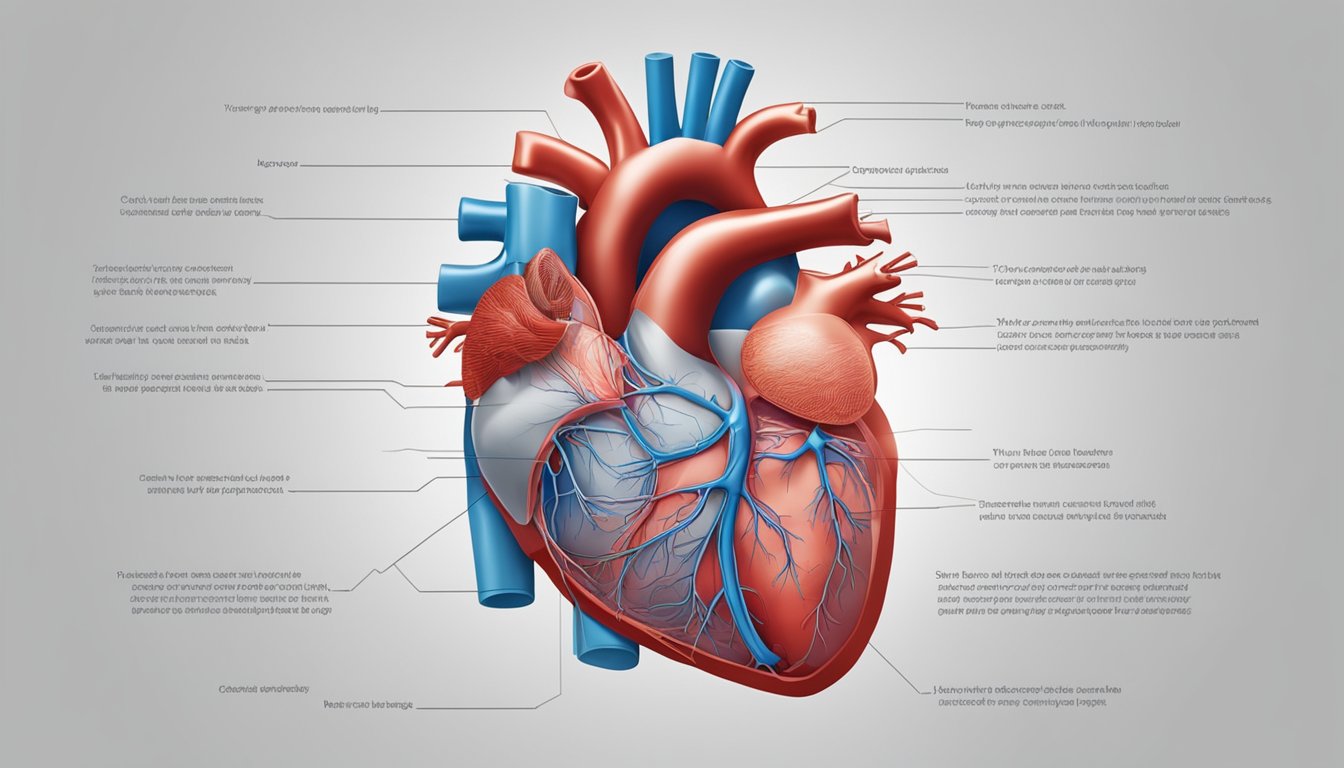
The heart is a vital organ that pumps blood throughout the body, delivering oxygen and nutrients to the various tissues and organs. The circulatory system is a complex network of blood vessels that connect the heart to the rest of the body.
Blood Vessels and Flow
The circulatory system consists of arteries, veins, and capillaries. Arteries carry oxygenated blood away from the heart to the rest of the body, while veins carry deoxygenated blood back to the heart. Capillaries are the smallest blood vessels and are responsible for the exchange of oxygen and nutrients between the blood and the surrounding tissues.
The aorta is the largest artery in the body and carries oxygenated blood from the heart to the rest of the body. The pulmonary artery, on the other hand, carries deoxygenated blood from the heart to the lungs, where it is oxygenated. The pulmonary veins then carry the oxygenated blood back to the heart.
The superior vena cava and inferior vena cava are large veins that carry deoxygenated blood from the upper and lower parts of the body, respectively, back to the heart. The coronary arteries are blood vessels that supply oxygenated blood to the heart muscle itself.
Oxygenation Process
The oxygenation process begins when the heart pumps oxygenated blood out of the left ventricle and into the aorta. The oxygenated blood then flows through the arteries to the various tissues and organs of the body. As the blood passes through the capillaries, oxygen and nutrients are exchanged with the surrounding tissues.
The deoxygenated blood then flows back to the heart through the veins, entering the right atrium. From there, it is pumped into the right ventricle and then into the pulmonary artery, which carries it to the lungs. In the lungs, carbon dioxide is removed from the blood and oxygen is added, creating oxygenated blood. The oxygenated blood then flows back to the heart through the pulmonary veins and enters the left atrium, completing the oxygenation process.
It is important to note that the circulatory system is a complex network that can be affected by various factors, including lifestyle choices and medical conditions. It is always recommended to consult with a healthcare professional for any concerns regarding the circulatory system.
Physiological Functions of the Heart
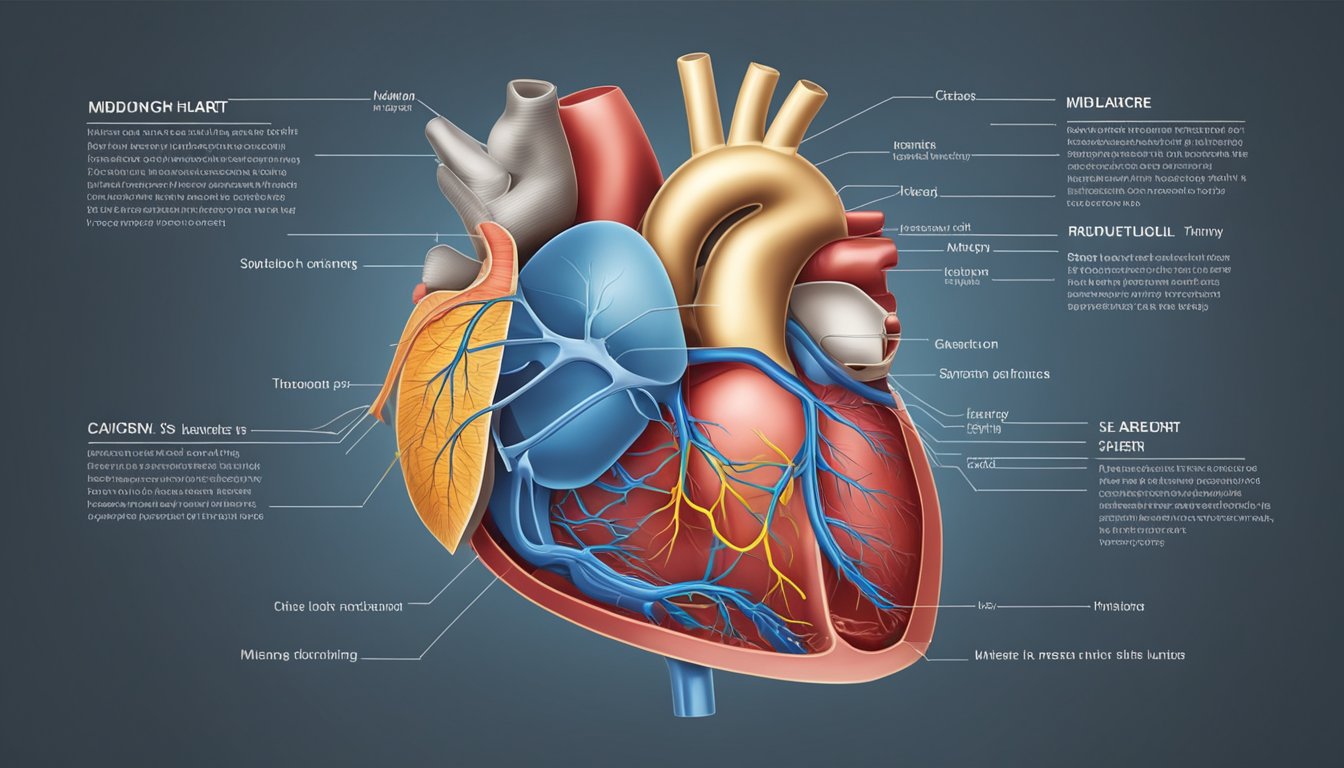
The heart is a vital organ that is responsible for pumping blood throughout the body. It is located in the chest, to the left of the center, and sits slightly behind and to the left of the sternum. The heart is composed of smooth muscle and has four chambers which contract in a specific order, allowing the human heart to pump blood from the body to the lungs and back again with high efficiency.
Cardiac Cycle
The cardiac cycle is the process by which the heart pumps blood throughout the body. It consists of two phases – systole and diastole. During systole, the heart contracts and pumps blood out of the ventricles and into the arteries. During diastole, the heart relaxes and fills with blood from the atria.
Electrical Activity
The heart is controlled by electrical impulses that originate in the sinoatrial (SA) node, which is located in the right atrium. The SA node acts as a pacemaker, generating electrical impulses that cause the heart to contract and pump blood.
Abnormalities in the heart’s electrical activity can lead to arrhythmias, which are irregular heartbeats. These can be caused by a variety of factors, including heart disease, high blood pressure, and certain medications.
In addition to its role in pumping blood, the heart also plays a key role in regulating blood pressure. The heart rate, or the number of times the heart beats per minute, is an important factor in determining blood pressure. When the heart beats faster, blood pressure increases, and when it beats slower, blood pressure decreases.
Overall, the heart is a complex organ with many important functions. It is essential for maintaining the circulation of blood throughout the body, and any abnormalities in its structure or function can have serious consequences for health. It is important to maintain a healthy lifestyle to ensure the proper functioning of the heart.
Getting assessed in Singapore
In Singapore, cardiology is provided in both the public and private sectors. Public heart services are concentrated at the National Heart Centre Singapore and the cardiology departments of the restructured hospitals, while private cardiologists practise from medical centres attached to private hospitals. A GP or polyclinic can arrange a referral, or a private clinic can be contacted directly.
If you want to know how this is assessed in practice, see what a cardiology consultation involves or cardiac screening, or review the preventive cardiology programme.
Frequently Asked Questions
In which part of the chest is the heart situated?
The heart is located in the chest, slightly left of the center, behind the breastbone, and between the lungs. The heart is situated in the middle mediastinum, which is the central compartment of the thoracic cavity.
Is the heart positioned on the left or the right side of the body?
The heart is positioned slightly on the left side of the body, but it is not entirely on the left side. The heart is located in the middle of the chest, with about two-thirds of the heart lying to the left of the midline and one-third to the right.
What is the precise location of heart pain typically felt?
Heart pain or angina is typically felt in the chest area, but it can also radiate to the arms, neck, jaw, shoulders, or back. The location and intensity of the pain can vary depending on the individual and the underlying cause of the pain.
In which region of the thorax can the heart be found?
The heart is located in the mediastinum, which is the central compartment of the thoracic cavity. The mediastinum extends from the sternum in front to the vertebral column behind, and from the superior thoracic aperture (the opening at the top of the thorax) to the diaphragm below.
How does the heart’s location vary between men and women?
The location of the heart is generally the same in both men and women. However, the size of the heart and its position in the chest cavity can vary depending on the individual’s age, weight, and overall health.
At what point in the chest cavity is the heart centrally located?
The heart is centrally located in the thoracic cavity, but it is slightly positioned to the left side of the chest. The base of the heart is located at the level of the third costal cartilage, and the apex of the heart lies just to the left of the sternum between the junction of the fourth and fifth ribs near their articulation with the costal cartilages.
Note: This information is intended for educational purposes only and should not be used as a substitute for professional medical advice, diagnosis, or treatment. If you have any concerns about your heart health, please consult a qualified healthcare provider.
Also on this site
Further reading
- HealthHub — Cardiovascular Disease
- National Heart Centre Singapore — Conditions & Treatments
- Health Promotion Board — Healthy Living
Disclaimer: This article is general information about cardiovascular health. It is not medical advice, diagnosis or treatment, and reading it does not create a doctor–patient relationship. Always seek the advice of your doctor or another qualified health professional with any questions you have about a medical condition, and never disregard or delay seeking medical advice because of something you have read here. If you think you may be having a medical emergency, call 995 or go to the nearest emergency department.